BNP sweeps Bangladesh polls; Tarique Rahman set to be PM
The decisive mandate paves the way for BNP Acting Chair Tarique Rahman to become Bangladesh’s next Prime Minister.

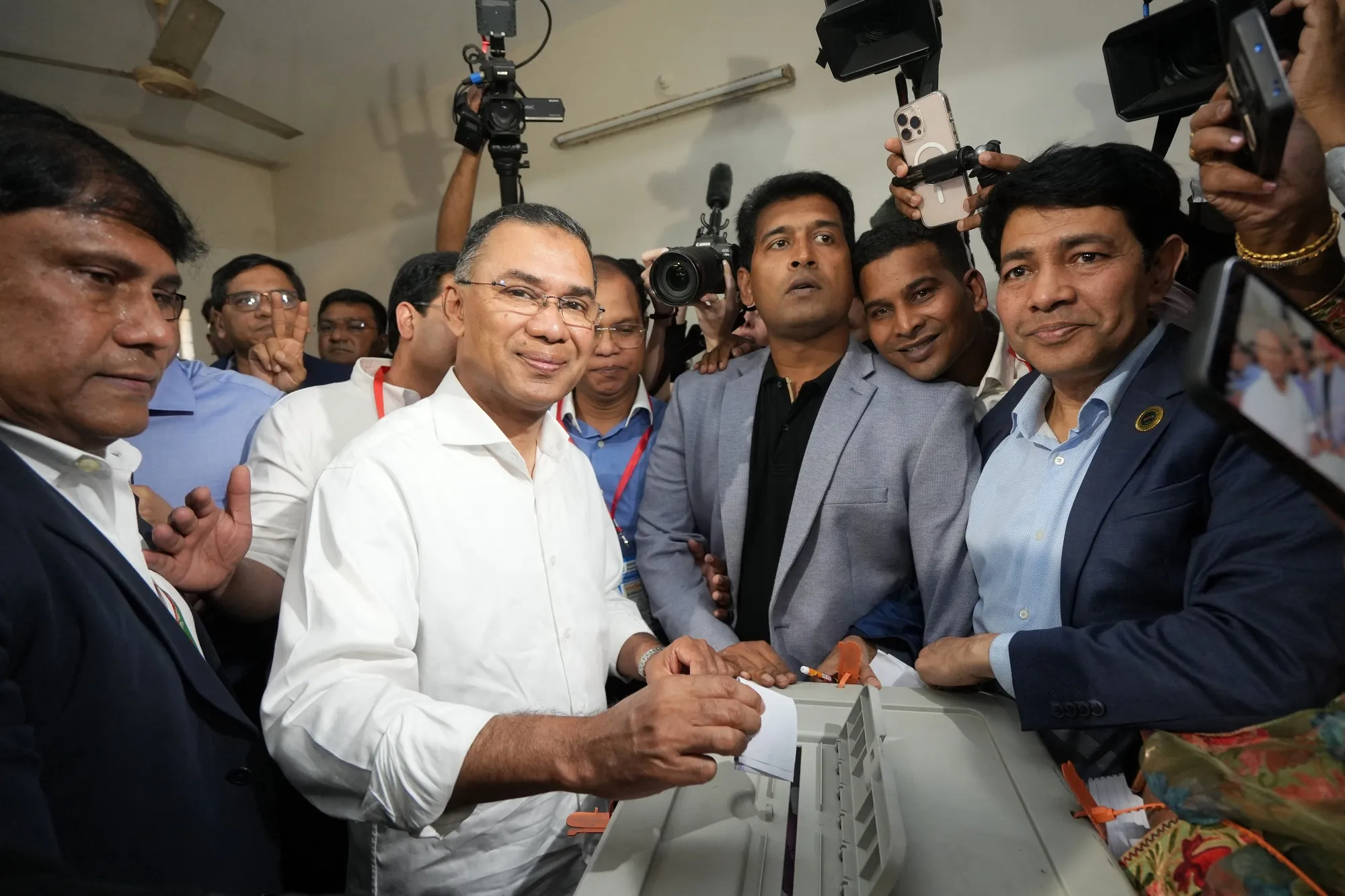
KATHMANDU: In a landmark general election held Thursday, Bangladesh Nationalist Party (BNP) has secured a sweeping victory, marking a powerful return to power after nearly two decades in opposition.
With voting conducted in 299 out of 300 constituencies — polling in Sherpur-3 was postponed following the death of a candidate — early results indicate that BNP is on track to secure close to a two-thirds majority in the 300-member parliament.
According to reports by leading Bangladeshi dailies, the BNP and its alliance partners have already confirmed victories in more than 150 seats and are leading in many others.
The decisive mandate paves the way for BNP Acting Chair Tarique Rahman to become Bangladesh’s next Prime Minister.
Rahman, the son of former Prime Minister Khaleda Zia, won convincingly from two constituencies — Dhaka-17 and Bogura-6.
Having lived in exile in the United Kingdom since 2008 for medical treatment, Rahman returned to Bangladesh in December after 17 years abroad. His mother passed away last month.
In his first reaction after the results, Rahman pledged to prioritise restoring law and order, describing the public mandate as a vote for “change and stability.”
Opposition Landscape Shifts
The 11-party alliance led by Bangladesh Jamaat-e-Islami has emerged as the principal opposition force. Jamaat chief Shafiqur Rahman won from Dhaka-15.
Meanwhile, the newly formed National Citizens Party (NCP), which rose from the July student-led uprising, secured several seats and established its parliamentary presence. NCP convener Nahid Islam is leading in Dhaka-11.
First National Vote Since 2024 Uprising
This election marks Bangladesh’s first national poll since the July 2024 student uprising that led to the ouster of former Prime Minister Sheikh Hasina, who later sought refuge in India.
Hasina has dismissed the election as “fraudulent and unconstitutional,” alleging that interim government chief Muhammad Yunus unlawfully seized power and orchestrated a “sham vote.”
Her party, the Awami League, was barred from participating in the election.
Referendum Signals Constitutional Overhaul
Alongside the general election, voters also took part in a referendum on the “July National Charter,” addressing key structural reforms including constitutional amendments, separation of powers among state organs, electoral system reforms, and anti-corruption measures.
Preliminary figures show that 65.3 percent of voters supported constitutional amendments — a result that could usher in sweeping changes to Bangladesh’s political framework in the coming months.
With a commanding parliamentary majority and a reform mandate from the referendum, the BNP-led government now faces the critical task of stabilising a nation emerging from months of political upheaval.