Betana Wetland dries up, threatening fish & farming
According to local authorities and conservation experts, the wetland is drying up due to a prolonged lack of rainfall and unsustainable water management practices.

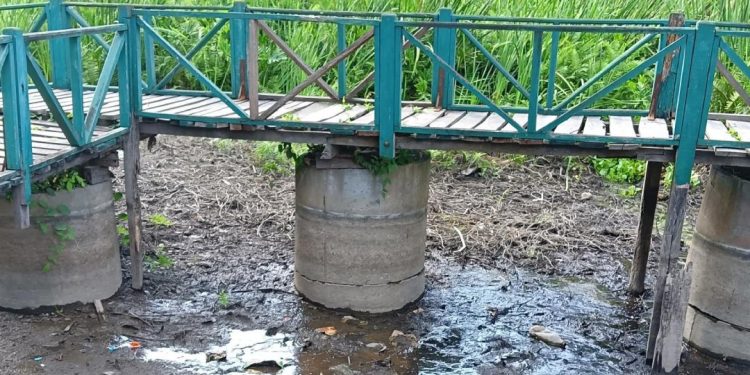
KATHMANDU: The Betana Wetland, a vital ecological and irrigation resource in Belbari Municipality of Morang, is facing a severe water crisis, with rapidly declining water levels triggering fish deaths and crippling irrigation across hundreds of bighas of farmland.
According to local authorities and conservation experts, the wetland is drying up due to a prolonged lack of rainfall and unsustainable water management practices.
The effects have been felt widely, especially in Belbari-4, where locals report extensive damage to paddy fields and other crops.
“Due to the shortage of rain, we haven’t been able to transplant paddy this year,” said Chandra Bahadur Limbu, Ward Chairperson of Belbari–4. “Even though water from the wetland is usually used to irrigate hundreds of bighas, it has been insufficient this season.”
To facilitate paddy transplantation, water stored in the wetland’s reservoir had to be released, leading to further depletion of the already low water levels.
Betana Wetland, located alongside the East-West Highway, comprises two ponds — both of which are now visibly drying.
As water levels dropped drastically, fish began dying en masse, and irrigation to over 1,200 bighas of agricultural land through the six-paini canal system has come to a halt. “With no water in the fields, crops are starting to dry out,” said one local farmer.
Water sources feeding the ponds — including natural springs and streams — have also dried up. Experts link this to both climate factors and human activities.
Rajendra Prasai, Joint Secretary of the Betana Community Forest Users’ Group, noted that all major springs around the wetland have dried up over the past month. “The dropping water level and fish mortality are serious issues. We’re initiating discussions for solutions,” he said.
Wetland researcher and conservation officer at the National Trust for Nature Conservation, Govinda Prasad Pokharel, highlighted several man-made causes: “Overuse of water, unplanned construction, and intensive agricultural practices are stressing the wetland system.”
Pokharel, who has studied all wetlands across Morang, explained that Betana Wetland originally relied on water from nearby forests and seasonal streams.
However, recent infrastructure developments, especially concrete structures, are preventing proper water retention.
He also pointed to a larger environmental trend: “Rainfall patterns are changing — more intense rain over shorter periods followed by prolonged dry spells. This reduces soil moisture and weakens the water recharge system.”
Pokharel emphasized the need for immediate research and intervention. “Ecological restoration, sustainable water use, recharge systems, and wetland rehabilitation are essential. If ignored, we risk losing a vital natural asset,” he warned.