Bangladesh holds first post-Hasina election
The election follows the student-led uprising of July 2024 that forced Hasina from power after weeks of deadly unrest.

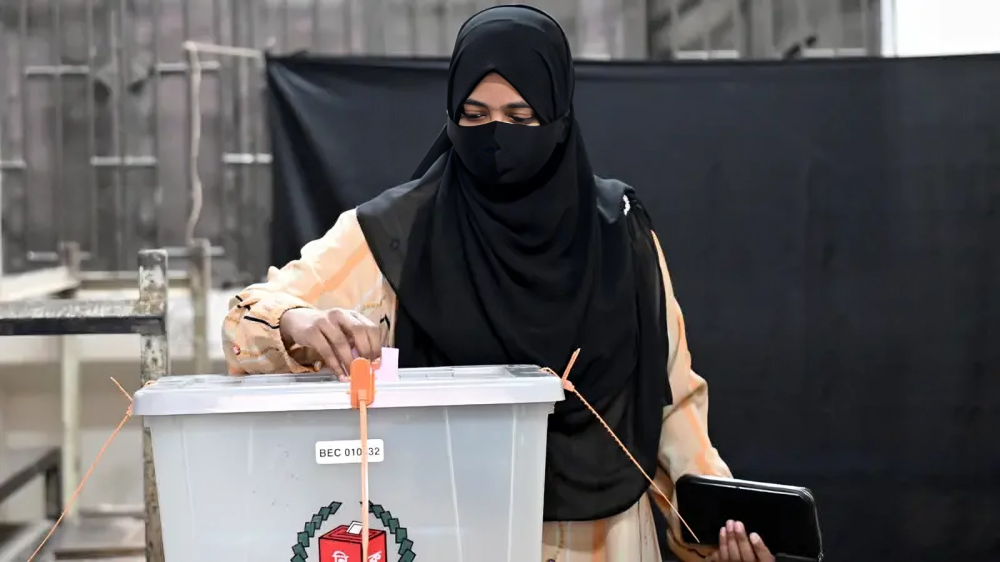
KATHMANDU: Bangladesh began voting early Thursday in its first general election since the end of Sheikh Hasina’s 15-year rule, marking a historic political turning point for the South Asian nation.
The election follows the student-led uprising of July 2024 that forced Hasina from power after weeks of deadly unrest.
For the first time in over a decade, Bangladeshis are choosing new leadership through what observers describe as a genuinely competitive democratic process.
This election is widely seen as unprecedented. It is the first in decades to be held without the active participation of the country’s two most dominant female political figures — Sheikh Hasina and Khaleda Zia. Hasina’s party, the Awami League, has been barred from contesting, reshaping the political landscape.
The main contest is expected to be between the Bangladesh Nationalist Party (BNP) and Jamaat-e-Islami, with the latter forming alliances with emerging political forces born out of the recent uprising.
Dual Ballot and Constitutional Referendum
Voters are casting two ballots. The first, on a white ballot paper, is to elect their local Member of Parliament.
The second, on a pink ballot paper, is for a nationwide referendum on constitutional reforms proposed by the interim government.
The reform package includes key structural changes: increasing women’s representation in parliament, introducing term limits for the prime minister, and establishing a bicameral legislature with a 100-member upper house. If approved, future constitutional amendments would require majority consent from the proposed upper chamber.
With nearly 120 million registered voters, the outcome is expected by Friday. Security has been significantly tightened across the country to ensure a peaceful vote.
BBC correspondent Yogita Limaye, reporting from Dhaka, noted that for the first time in years, predicting the outcome before polling has proven difficult. According to her, many voters feel they now have a genuine choice — a sentiment absent in previous elections.
Legacy of Unrest
The July “Gen Z” uprising proved to be a defining moment. At least 1,400 protesters were killed in clashes with security forces, according to reports.
Hasina has since been convicted of crimes against humanity related to the crackdown and sentenced to death.
Following her departure from the country, Nobel Peace Prize laureate Muhammad Yunus was appointed to lead an interim government tasked with restoring democratic order and overseeing the transition.
Thursday’s election is being viewed by many citizens as the beginning of a new era of representative governance — a decisive step away from authoritarian rule toward full democracy.
As Bangladesh waits for the results, the vote stands as a critical test of its democratic resilience and political renewal.