Nepal police issues strict noise guidelines, sparks privacy concerns
Among the more unusual points, the police have warned that sounding a pressure cooker whistle late at night or early in the morning could result in a fine of up to Rs 300,000.


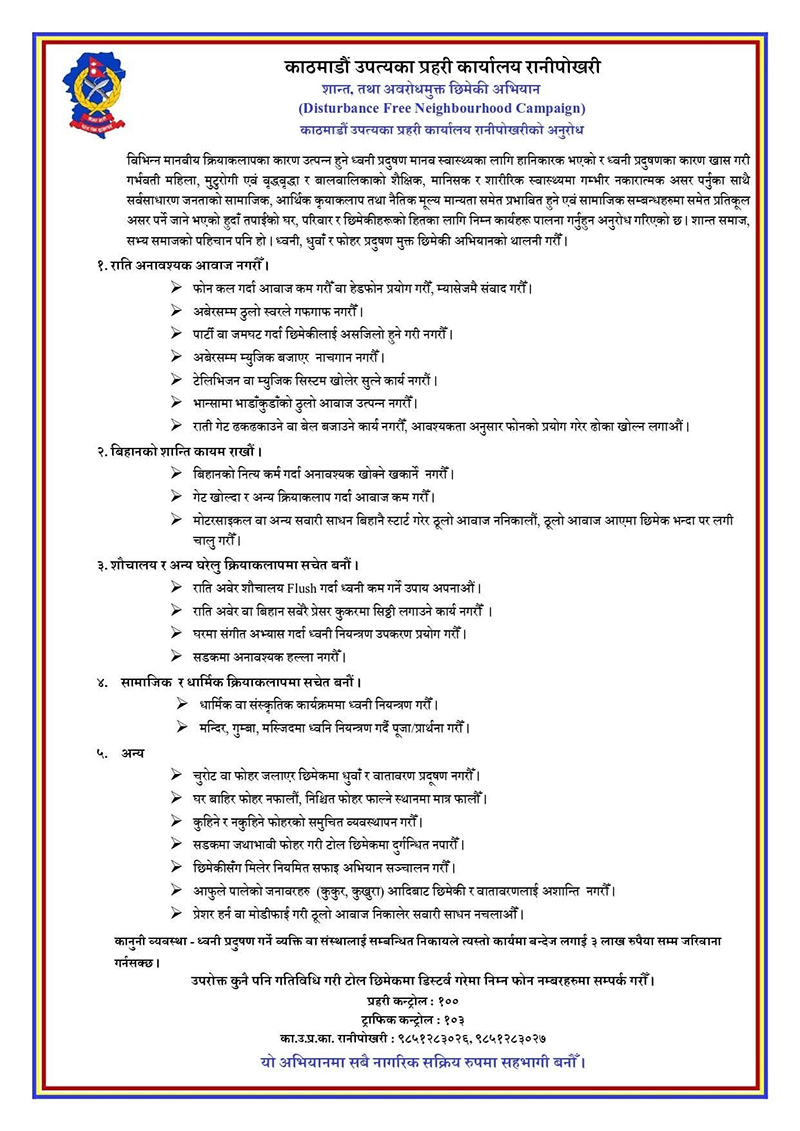
KATHMANDU: In an effort to foster a peaceful and civilized society, the Kathmandu Valley Police Office, Ranipokhari, has launched a campaign titled “Peaceful and Obstruction-Free Neighborhood.”
As part of this initiative, a 23-point public notice has been issued, urging citizens to refrain from activities that may cause noise or environmental pollution.
The notice includes a wide range of behavioral guidelines, such as avoiding loud noises from household activities and minimizing disturbances during late night and early morning hours.
Among the more unusual points, the police have warned that sounding a pressure cooker whistle late at night or early in the morning could result in a fine of up to Rs 300,000.
Additionally, the notice discourages residents from:
-
Coughing or clearing their throat unnecessarily during morning routines,
-
Flushing toilets loudly at night,
-
Creating loud noises from kitchen utensils.
Authorities claim these measures are aimed at protecting public health, especially for vulnerable groups such as pregnant women, heart patients, the elderly, and young children.
The notice emphasizes the harmful effects of noise and smoke pollution on mental, physical, and educational well-being.
Public Reactions & Controversy
While the majority of the listed points have been welcomed as steps toward a more mindful and respectful society, several items have drawn criticism for appearing to overreach into citizens’ private lives.
Critics argue that advising how people should cough, flush toilets, or cook within their own homes may be excessive and difficult to enforce.
Legal and civil society observers have voiced concerns over the practicality and legality of such measures, suggesting that while the intention may be good, the execution risks infringing on personal freedoms and everyday human behavior.
Despite the backlash, police officials have defended the campaign, stating that it is focused more on raising awareness and promoting voluntary behavioral changes rather than imposing strict penalties.