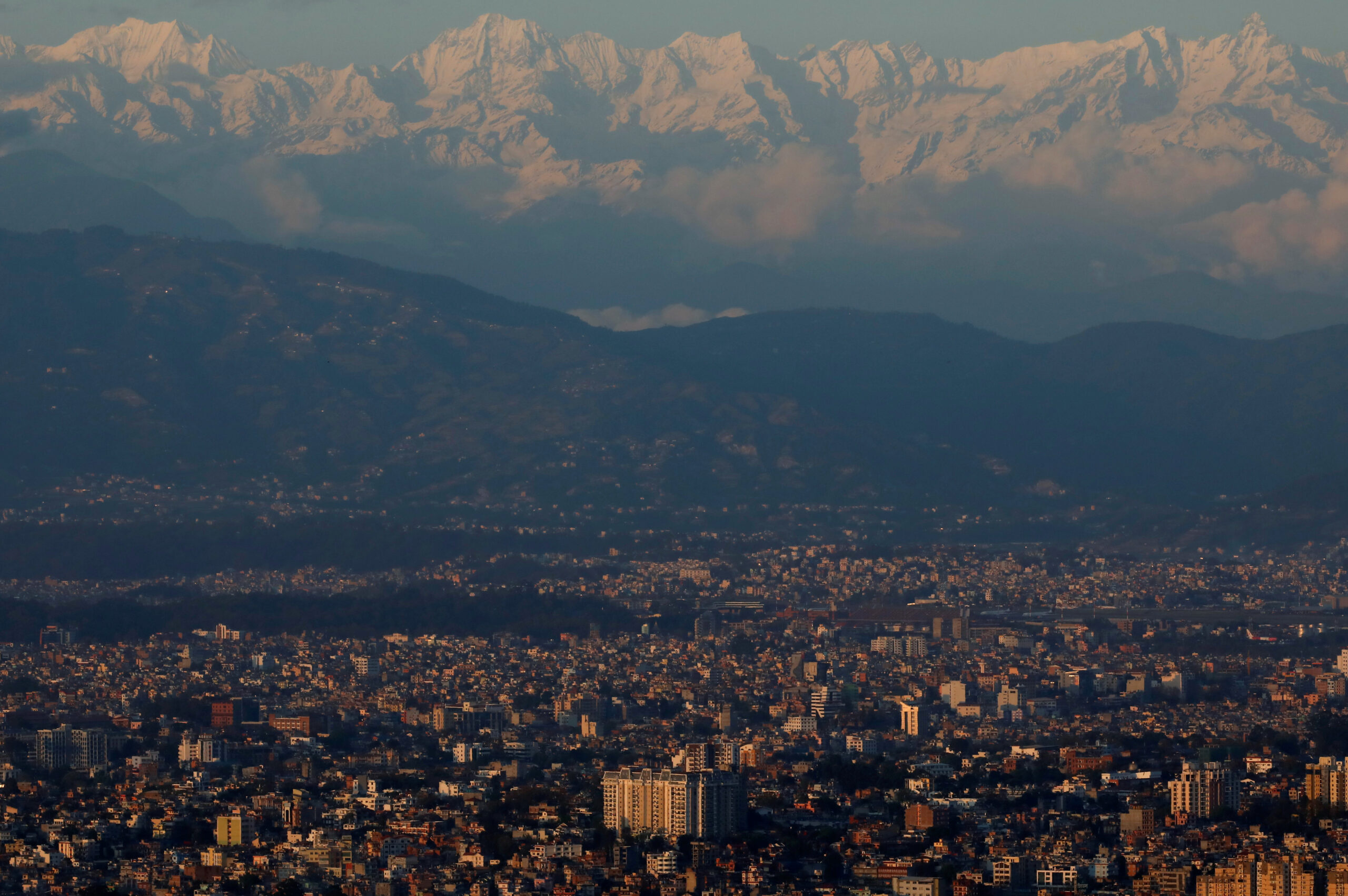
Director General of the Department of Environment, Gyan Raj Subedi, attributed the sustained pollution to the prolonged absence of rainfall and stagnant air. “Kathmandu Valley is bowl-shaped. Without wind or rain, pollutants accumulate and cannot disperse. Smoke and dust remain suspended in the air,” he said.
He also cited emissions from industries, factories, and rapid development and construction activities as contributing factors.
Cross-border pollution entering from neighboring regions has further deteriorated air quality, he added.
Subedi warned that pollution levels could rise further if rainfall does not occur soon.
The department has urged relevant authorities to adopt sustainable and environment-friendly development measures.
On Tuesday, Kathmandu was listed as the eighth most polluted city in the world. India’s New Delhi topped the global ranking with an AQI of 247.
Disaster management expert Dr. Dharma Raj Upreti explained that an AQI between 0 and 50 is considered good (green category), while 51 to 100 calls for caution (yellow category).
An AQI of 101 to 150 is deemed unhealthy for sensitive groups, particularly those with respiratory and heart conditions.
Levels between 151 and 200 are unhealthy for everyone, 201 to 300 are classified as very unhealthy, and readings above 300 are considered hazardous.
Under the Air Quality Management Action Plan for Kathmandu Valley (2019), the government categorizes AQI levels above 300 as a disaster.
The action plan outlines measures such as banning the burning of waste, increasing the use of mechanical road sweepers and vacuum systems, and issuing public advisories urging children, the elderly, and patients to take special precautions.
The National Environment Policy (2019) also commits to formulating and enforcing national standards to control air, water, soil, noise, electromagnetic radiation, radioactive, and hazardous chemical pollution.
It further provides for the establishment of monitoring stations in major cities, industrial corridors, and high-risk areas to map and manage air, water, and noise quality nationwide.
Authorities continue to monitor the situation as public health concerns mount amid persistent pollution across the Valley.