Hantavirus: Rare rodent virus raises concern
Global health authorities are closely monitoring the situation, though experts say the overall public health risk remains low.


KATHMANDU: A rare but deadly virus known as Hantavirus has drawn worldwide attention after multiple infections and deaths were linked to a cruise ship outbreak in 2026.
Global health authorities are closely monitoring the situation, though experts say the overall public health risk remains low.
What Is Hantavirus?
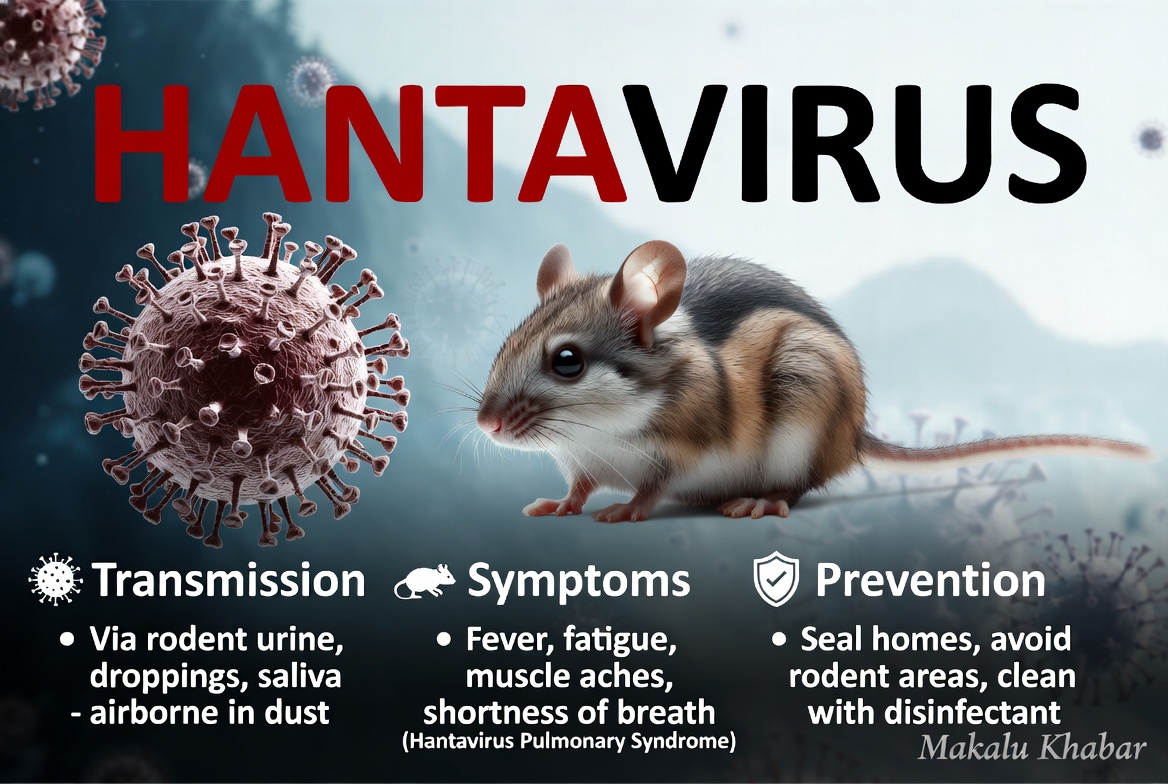
Hantavirus is a group of viruses mainly carried by rodents such as rats and mice. Humans become infected after coming into contact with infected rodent urine, saliva, or droppings.
The virus can cause severe illnesses, including:
- Hantavirus Cardiopulmonary Syndrome (HCPS), which affects the lungs and heart
- Hemorrhagic Fever with Renal Syndrome (HFRS), which damages the kidneys and blood vessels
Some strains of the virus have fatality rates as high as 50 percent.
How Does It Spread?
Health experts say hantavirus mainly spreads through:
- Breathing air contaminated by rodent urine or droppings
- Touching contaminated surfaces
- Rodent bites in rare cases
- Cleaning dusty or rodent-infested places
People working in farming, forestry, or staying in poorly cleaned buildings face higher risks.
Human-to-Human Transmission
Most hantavirus strains do not spread easily between people. However, the Andes virus strain, mainly found in South America, can spread through close and prolonged human contact.
Experts stress that hantavirus is far less contagious than COVID-19 and does not spread rapidly through casual contact.
Where Did the Latest Outbreak Happen?
The latest outbreak was linked to the cruise ship MV Hondius, which traveled near Argentina and Antarctica before heading toward the Canary Islands.
Passengers from several countries, including the United States, Germany, France, and South Africa, were reportedly affected.
Health authorities believe the first infections likely occurred in South America before limited transmission happened onboard the ship.
Death Toll and Confirmed Cases
So far:
- Around 8 to 9 cases have been reported
- At least 3 deaths have been confirmed
- Several patients remain under medical care and observation
The outbreak has been linked to the Andes hantavirus strain, one of the few known types capable of limited person-to-person transmission.
Globally, experts estimate tens of thousands of hantavirus infections occur every year, especially in Asia and Europe.
What WHO and Global Experts Said
World Health Organization officials said the incident is serious but the global public health risk remains low.
WHO warned that additional cases may still emerge because the virus can take several weeks before symptoms appear.
Health experts also emphasized:
- The virus is already well-known to scientists
- Human-to-human spread remains rare
- The outbreak is not expected to become another global pandemic
U.S. authorities said they are closely monitoring exposed travelers and continuing precautionary measures.
Symptoms of Hantavirus
Symptoms usually appear between one and eight weeks after exposure.
Common symptoms include:
- Fever
- Headache
- Muscle pain
- Fatigue
- Vomiting
- Abdominal pain
Severe cases may rapidly lead to:
- Breathing difficulties
- Lung failure
- Shock
- Kidney failure
Doctors say early medical treatment significantly improves survival chances.
Is There a Vaccine or Cure?
Currently:
- No specific cure exists for hantavirus
- No widely available vaccine is available
- Treatment mainly focuses on supportive hospital care and oxygen therapy
Patients with severe symptoms often require intensive care treatment.
Why Experts Say Panic Is Unnecessary
Despite the recent deaths, health authorities say there is no reason for panic because:
- The virus spreads slowly
- Transmission usually requires close contact
- Most strains do not spread between humans
- Scientists already understand the disease well
Authorities across several countries continue contact tracing and health monitoring as investigations into the outbreak continue.