Gagan declares candidacy for NC president, stresses timely elections
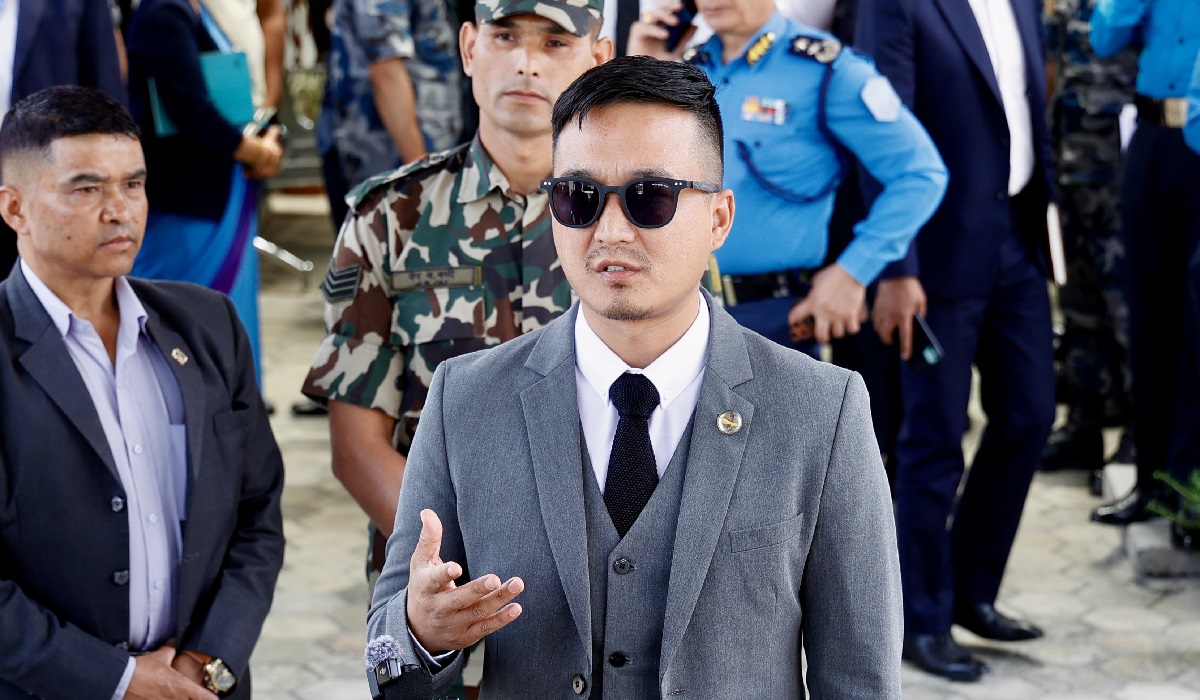
Addressing a programme in Kathmandu on Monday, Thapa said he is contesting for the party presidency and expressed confidence in his victory.

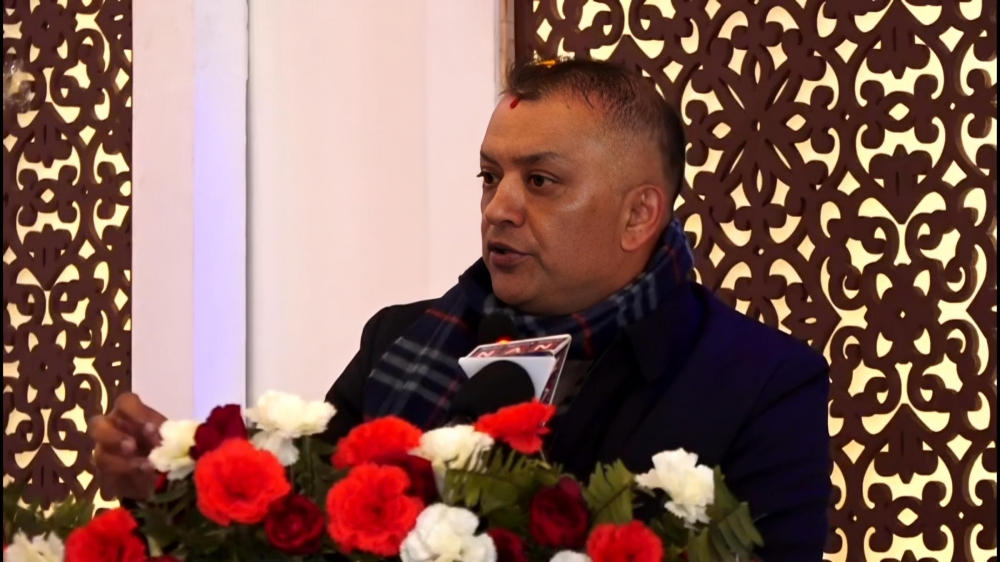
KATHMANDU: Nepali Congress General Secretary Gagan Kumar Thapa has formally announced his candidacy for party president at the 15th General Convention, declaring that the upcoming convention must not only change leadership but also fundamentally renew the party.
Addressing a programme in Kathmandu on Monday, Thapa said he is contesting for the party presidency and expressed confidence in his victory.
He described the 15th General Convention as a decisive moment to transform the Nepali Congress into a stronger, more credible and future-ready political force.
Thapa voiced concern over delays in submitting and processing active membership details, stating that such tasks should have progressed more smoothly.
While refraining from directly blaming individuals, he warned that unnecessary delays could undermine the timely conduct of the convention. He said the party still has the capacity to complete the process if leadership acts decisively.
“As General Secretary, I have been clearly telling the party president that the convention must be held on time,” Thapa said, adding that he is prepared to pay any political price to ensure the convention is conducted before the upcoming elections. According to him, Nepali Congress cannot go to elections without holding either a regular or a special general convention.
He reiterated that internal democracy within the party is non-negotiable and that leadership renewal through the convention is essential for rebuilding public trust.
Sept 8 Incident: Moral Responsibility of the State
Thapa also strongly criticised the government over the incident that occurred on Sept 8, calling it one of the most tragic and unimaginable events in Nepal’s history. Referring to the day as a “black day,” he expressed deep sorrow over the loss of many young lives.
He said public anger spilling onto the streets was natural under the circumstances, but the government failed in managing the situation. Raising the issue of political morality, Thapa stressed that accountability is most important for those holding public office.
“Political morality is a very serious matter,” he said, adding that taking responsibility does not make leaders weaker, but stronger. According to him, those in the highest positions must bear the greatest responsibility.
Thapa stated that if he were in power at the time, he would have owned responsibility for the incident. While investigations have their own place, he argued that the government cannot escape moral accountability.
He maintained that the then prime minister, as head of the government, should have taken responsibility for the incident.
March 5 Elections ‘Unavoidable’
On the broader political situation, Thapa emphasised that holding the House of Representatives election on March 5 is unavoidable to bring the constitution back onto its rightful track.
He said growing uncertainty over whether elections will take place has created political instability, which must be resolved through timely polls.
“The constitution has drifted away from its intended course,” Thapa said, adding that elections are necessary to restore constitutional order. He argued that a new parliament, formed through elections, would gradually move the country forward through lawful and democratic processes.
He underlined that whether election results favour a particular party is secondary at this moment. What matters most, he said, is giving the country a way out of prolonged uncertainty through a fresh mandate and a new government.
Reflecting on Nepal’s political history, Thapa argued that if regular elections had been held every five years since 2015 BS, the country’s trajectory would have been very different.
He added that consistent democratic practice and periodic elections could have strengthened institutions regardless of past political systems.
Warning that failure to hold elections on time could push the country into another cycle of deep uncertainty, Thapa urged all concerned stakeholders to act responsibly for political stability and democratic continuity.