From posters to pixels: Evolution of film promotion in Nepal
Today, as the world embraces the age of artificial intelligence, promotional strategies have shifted dramatically.


KATHMANDU: For audiences, films are a source of entertainment; for producers, they are a business.
With the primary goal of recovering investment and making profit, filmmakers invest significant sums—some succeed, while others fall short.
Beyond production, a film’s commercial success often depends heavily on how effectively it is promoted.
Today, as the world embraces the age of artificial intelligence, promotional strategies have shifted dramatically.
Digital marketing and social media now dominate film publicity, becoming the top priority for producers seeking wide reach and instant engagement.
However, the landscape was vastly different in the past, when neither social media nor modern media platforms existed.
Film promotion relied on traditional methods such as posters, newspapers, public announcements (miking), and songs.
Posters: The Backbone of Promotion
Posters once served as the primary promotional tool. With technological limitations in Nepal, filmmakers even traveled to Bombay (now Mumbai) in India to print them. Veteran artist, producer, and director Neer Shah recalls that posters were the central attraction of film promotion.
“Posters were displayed everywhere. There were plenty of open spaces for posting them,” he says. “Different sizes were printed in Bombay, and around 5,000 to 10,000 copies were distributed in the market.”
Producer and distributor Chhabi Raj Ojha also emphasizes their importance. Featuring well-known actors, posters drew public attention and informed audiences about upcoming releases. With fewer films being produced at the time, posters played a key role in building anticipation across the country.
Director Laxminath Sharma adds that since there were no restrictions on where posters could be placed, producers focused heavily on making them visually appealing.
Radio Nepal: The Power of Songs
Before the rise of FM stations, Radio Nepal was the main platform for broadcasting film songs. Established in 1951 (2007 BS), Radio Nepal predates Nepal’s first Nepali-language film Aama, released in 1965 (2022 BS).
According to Nir Shah, it was only after Nepal Television was established in 1985 (2042 BS) that songs began to be formally broadcast on television.
“At that time, there were no FM stations, and songs were not aired as dedicated film promotions,” he recalls. “But since music played continuously on Radio Nepal, films still received strong exposure.”
Ojha notes that a new song release would instantly create excitement, with Radio Nepal airing it frequently throughout the day and night. Sharma adds that detailed credits—film name, lyricist, composer, and singers—were announced, making radio an attractive promotional platform for producers.
Miking: Reaching the Masses
Public announcements, or miking, were another powerful promotional method, especially outside the Kathmandu Valley. Vehicles like rickshaws and taxis equipped with loudspeakers would travel through towns publicity films.
“Our industry hadn’t yet adopted a collective promotional approach,” says Neer Shah. “Producers handled promotion individually based on their capacity.”
Ojha recalls that miking, often accompanied by film songs, effectively grabbed public attention from street corners to cinema halls.
Newspapers: A Key Information Source
In the absence of FM radio and private television channels, newspapers were a major source of information. Publications like Gorkhapatra, Kantipur, and Jana Aastha held strong influence.
Producers prioritized both news coverage and advertisements in these outlets. With the common habit of reading newspapers over morning tea, audiences stayed informed and engaged with upcoming films.
Audience Interaction Only After Success
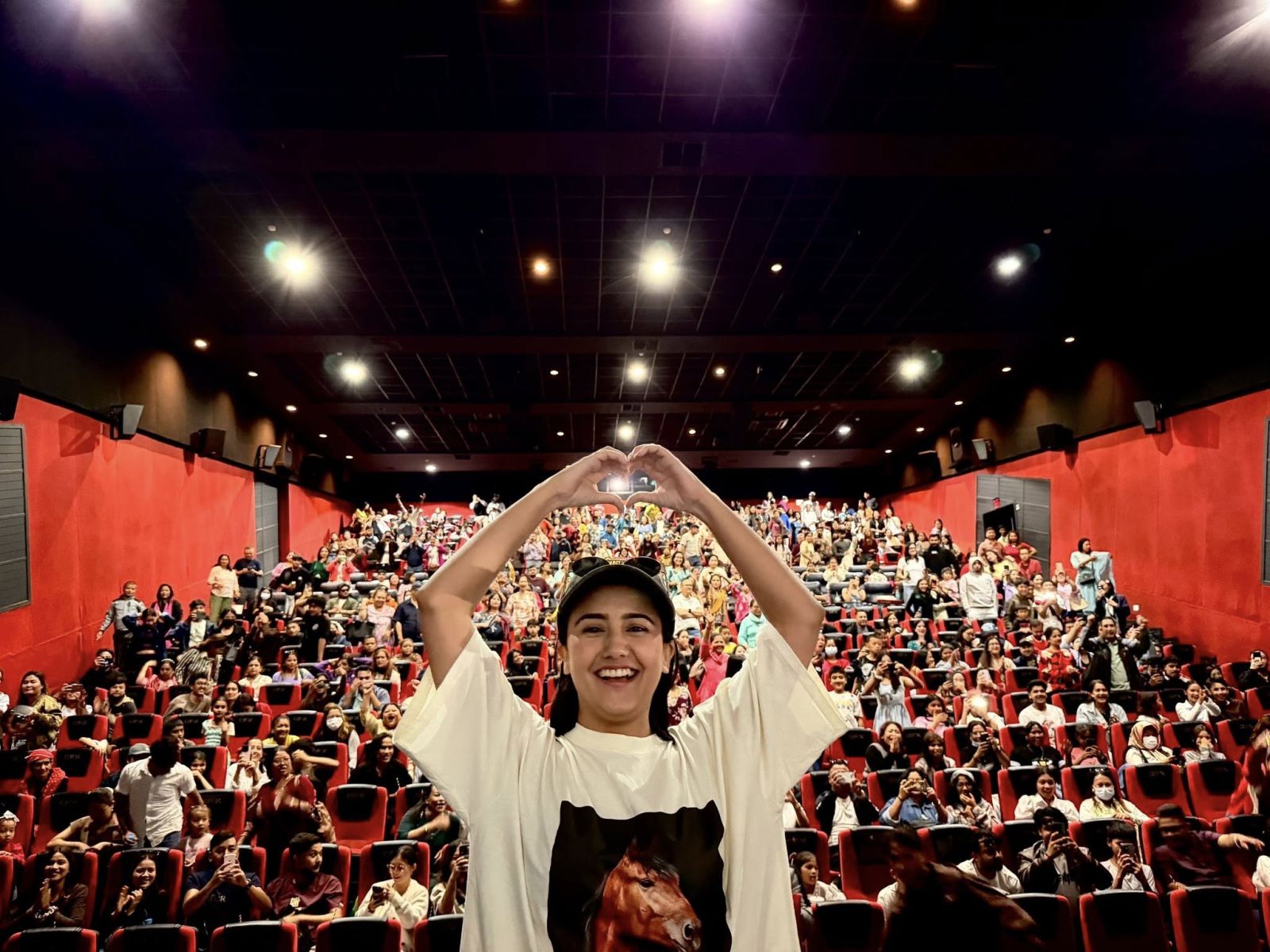
Unlike today—where actors actively promote films through interviews, media appearances, and theater visits—direct interaction with audiences was rare in the past.
According to Neer Shah, filmmakers waited until a movie achieved milestones like a “Silver Jubilee” (25 weeks) or “Golden Jubilee” (50 weeks) before organizing special events.
“Only after a film proved successful would artists meet audiences,” he says. “That system itself helped build a film’s reputation.”
Director Sharma agrees, noting that actors did not perform or engage publicly unless the film had already succeeded.
Promotion Costs: Then vs Now
Today, film promotion can cost between Rs 1.5 million to 2 million, largely spent on online and social media advertising.
In contrast, Neer Shah recalls that spending up to Rs 100,000 in his time was considered substantial. Most expenses went toward posters and miking due to limited media channels.
Ojha adds that promotional budgets were determined by the film’s overall cost, focusing mainly on traditional methods.
Box Office: From Guesswork to Transparency
In earlier times, there was no formal box office system. Producers relied on figures provided by cinema hall operators, with little transparency.
“We had to trust whatever numbers the hall operators gave us,” says Neer Shah. “It wasn’t as transparent as today.”
However, government policies—such as refunding entertainment tax—helped filmmakers recover costs. Combined with ticket sales, most films managed to break even, with fewer losses compared to today.
Ojha explains that performance was often judged by weekend collections. With a limited number of theaters, strong Friday and Saturday earnings reassured producers. A good film would continue running, while a weak one would fade within days.