Black rain reported in Tehran
The World Health Organization has cautioned that attacks on oil refineries can pose serious health risks for nearby populations due to the release of toxic chemicals.

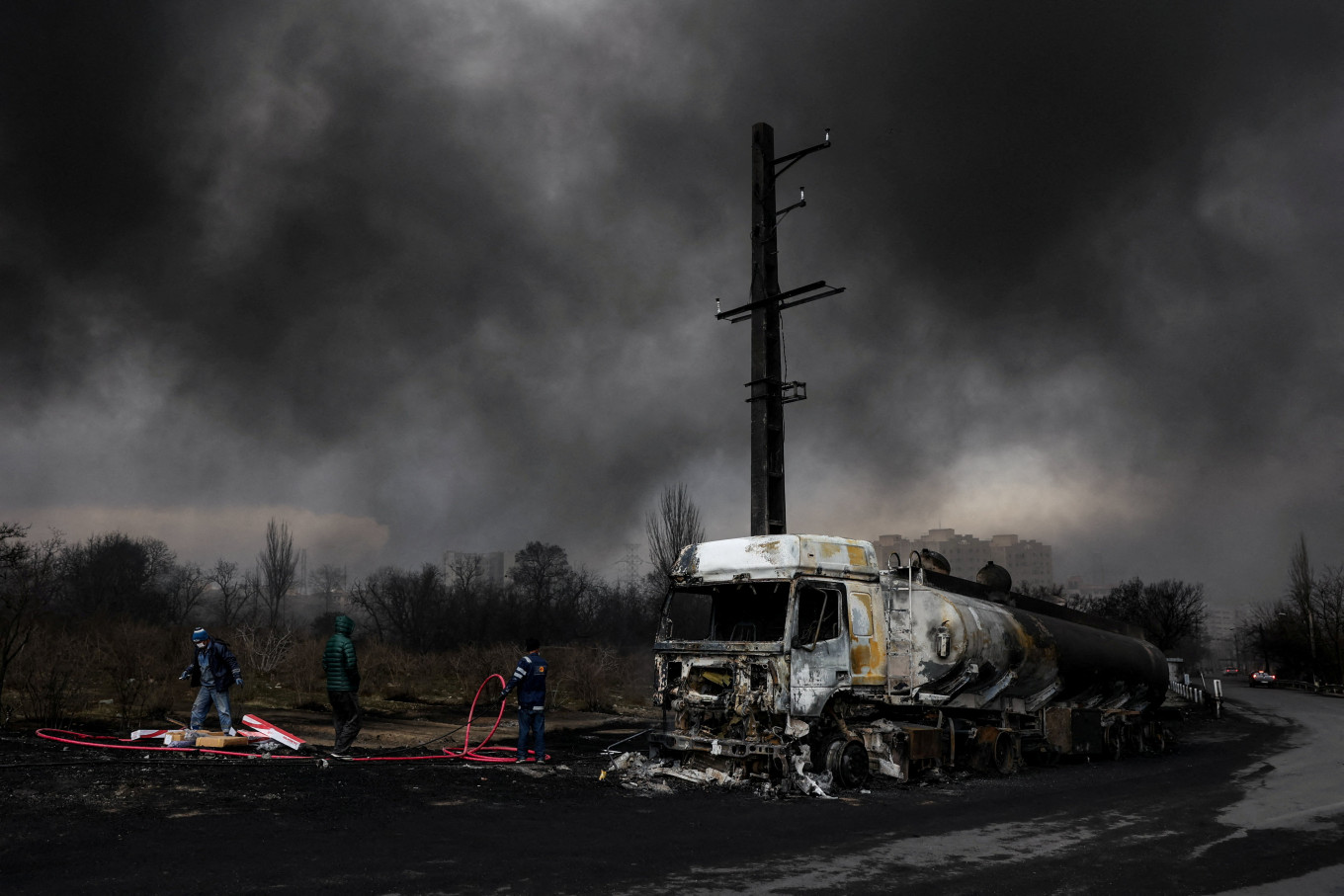
KATHMANDU: Residents of Tehran have reported witnessing “black rain” in recent days as thick smoke and pollution engulf parts of the Iranian capital following attacks on key oil facilities.
The reports emerged after strikes by the United States and Israel beginning on Feb 28 targeted multiple oil-related sites around the city.
At least four oil processing facilities near Tehran were hit, triggering large fires and sending dense plumes of smoke into the air.
Residents say the pollution has become so severe that sunlight is barely visible in some areas of the city. Many have also reported a persistent smell of burning in the air.
Experts warn that dangerous pollutants have likely surged in the atmosphere.
The World Health Organization has cautioned that attacks on oil refineries can pose serious health risks for nearby populations due to the release of toxic chemicals.
Tehran, a city of nearly 10 million people with millions more living in surrounding areas, is now facing heightened air pollution concerns.
Satellite images taken on March 9 show fires still burning at two major oil facilities in Tehran. The images reveal smoke rising from the Shahran fuel depot in the northwest of the city and the Tehran oil refinery in the southeast.
When oil refineries burn, they release a complex mixture of chemicals. If oil does not burn completely—due to insufficient oxygen—it produces carbon monoxide and black carbon particles instead of carbon dioxide and water vapor.
Fires at oil facilities can also release sulfur dioxide and nitrogen oxides, which may form acidic compounds if they mix with rainwater.
In addition, hazardous hydrocarbons, metal compounds and oil droplets can be released into the atmosphere.
A 20-year-old resident of Tehran told BBC Persian that the air around her neighborhood carries the smell of burning fuel.
“I haven’t seen the sun,” she said. “There is terrifying smoke everywhere, and it’s still there.”
Scientists say accurately measuring the pollution is difficult because ground-based monitoring data is unavailable.
Satellite analysis is also complicated by clouds, wind patterns and atmospheric conditions.
However, researchers say the chemical mixture released from burning oil facilities leaves little doubt that the pollution could be severe.
According to Dr. Akshay Deoras, a research scientist at the University of Reading, the situation differs significantly from the smog commonly seen in cities such as Kathmandu, Beijing or Delhi.
“This situation is clearly different because it is driven by missile strikes and aerial attacks on oil refineries,” he said. “Many conflicts increase dust and particle pollution, but in this case the chemical mix is unusual.”
One resident said “black rain” fell in parts of Tehran on Sunday. Scientists explain that black rain occurs when raindrops absorb polluted particles from the atmosphere, making the rainfall appear dark.
Rain can wash pollutants out of the air by carrying them to the ground, which is why residents may observe dark-colored droplets during heavily polluted conditions.
Weather forecasts from indicate that rainfall and strong winds could affect Tehran in the coming days.
While rain may help reduce airborne pollution by bringing particles down to the ground, experts warn that the environmental risk does not disappear.
Pollutants can settle into rivers and water sources, and once the ground dries, winds may lift the particles back into the air, potentially spreading contamination again.