Bardia families issue formal ultimatum to WWF, ZSL, NTNC, IUCN, DNPWC & social welfare council

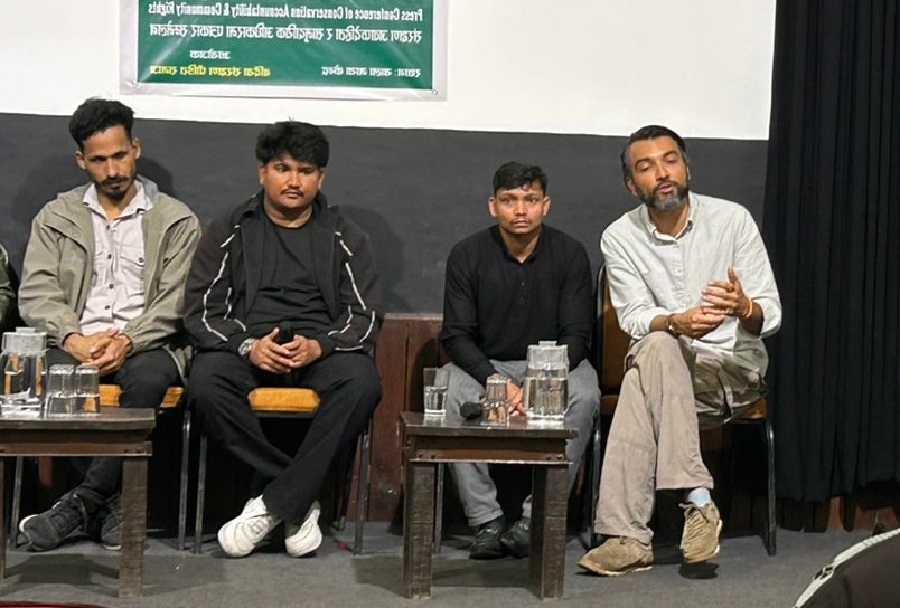
KATHMANDU: The Bardia Conservation Victims Group today released a formal open letter charging six institutions — WWF Nepal, ZSL Nepal, NTNC, IUCN Nepal, DNPWC, and the Social Welfare Council — with collective responsibility for a humanitarian crisis that has claimed 47 lives in Bardia since 2019/2020, and 68 lives across Nepal during the TX2 tiger-doubling campaign.
The letter is being simultaneously distributed to over 160 global bodies, including UN Special Rapporteurs, the CBD and CITES Secretariats, bilateral donors, diplomatic missions, universities, and international media.
What the Letter Charges
Conservation organisations artificially inflated Bardia’s tiger population from 18 to 125 in 13 years — through 180 constructed water sources, manipulated grasslands, and chemical interventions — creating an unnatural density that forced tigers into human settlements.
The letter provides extensive evidence that the organisations knew this was happening:
- WWF Nepal’s own representative stated publicly in August 2022 that he was “more concerned about extinction” than about human deaths — by which point 62 people had already died
- An NTNC official described 75 deaths as grounds to “capitalise” through wildlife tourism
- Former DNPWC directors admitted on record that the crisis was known and that no plan was made
- Four consecutive Tiger Conservation Action Plans (2008–2027) contain no single measure for protecting human lives
- Navina Chaudhary, 18, was shot dead by police while demanding protection in June 2022 — TAP IV was finalised months later with no changes
The Social Welfare Council’s Role
The letter charges the Social Welfare Council — whose mandate is to prevent monopoly and misconduct by NGOs and INGOs in Nepal — with complicit silence.
Small community organisations face routine scrutiny for minor lapses; millions of dollars flowing through WWF, ZSL and NTNC to create this crisis never attracted a single regulatory intervention.
International Aid Agencies: Funding Without Accountability
The organisations named in this letter did not act alone. Behind them stands a network of bilateral donors and international aid agencies — including the UK’s FCDO, USAID, GIZ, Norad, Sida and the Global Environment Facility — whose funding underwrote every phase of this crisis.
Millions of dollars channelled through WWF Nepal, ZSL Nepal and NTNC built the infrastructure that forced tigers into human settlements: the artificial water sources, the manipulated grasslands, the anti-poaching surveillance technology deployed without a single parallel investment in community protection. It is their money that created this crisis.
And not one of them has sought accountability — financial, social, moral, or ecological. Not one has audited whether its investment produced the humanitarian outcomes it claims to champion. These are the same agencies that speak tirelessly of humanitarian values, of community-centred development, of leaving no one behind. For them, it appears, ticking the GEDSI boxes on paper is accountability enough.
The Ultimatum
14 days: Joint public acknowledgement of deaths, failure, and institutional responsibility
30 days: Emergency protective measures deployed for communities, using technology already available to these organisations
60 days: Independent review of carrying capacity, ecological damage, and compensation framework for victims’ families
Permanent: Community veto power over all future conservation decisions affecting Bardia
If these demands are not met, the group has committed to mass mobilisation to Kathmandu, coordinated campaigns targeting global donors, comprehensive legal proceedings, and direct community self-protection measures.
The Human Cost
Among the dead: Shivam Tharu, four years old, killed in his own yard. Nandakala Thapa, fifty, taken from her motorcycle — her body never found.
Binita Pariyar, seventeen, killed walking home from school. Lili Chaudhary, a single mother of two, killed outside her home.
Dinesh Tharu, killed collecting mushrooms — his father-in-law Ramesh went to find him, and the same tiger killed him too.
These are not statistics. These are the people who signed this letter with their absence.