Yams farming provides jobs for 22, saves Rs 700,000
Despite having no prior experience in commercial farming, his watermelon cultivation, started three years ago, now provides livelihoods for 22 people.

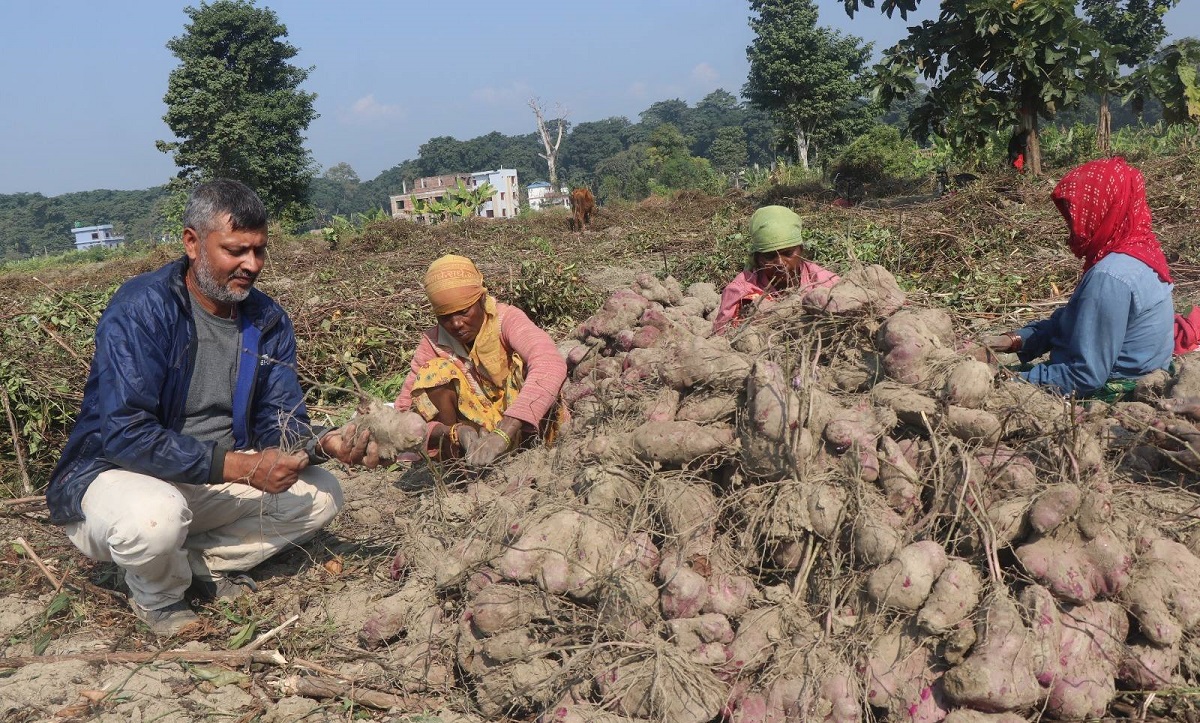
KATHMANDU: Seven years ago, Khemraj Kattel moved from Sankhuwasabha to Sundarharaicha Municipality in Morang. Today, he is recognized as a successful farmer.
Despite having no prior experience in commercial farming, his yam cultivation, started three years ago, now provides livelihoods for 22 people.
Khemraj began by renting three bighas of land in Sundarharaicha–7, in a place locally known as “75 Bigha.”
“I had no knowledge of farming, but after three years of effort, I have been able to create employment for 22 people and help them become self-reliant through watermelon farming,” he said.
New Hope on Dry Land
The “75 Bigha” area of Sundarharaicha–7 had long suffered from water scarcity and wild animal threats.
Crops like rice and maize would wither, as borewell water alone was insufficient. “Even banana cultivation used to happen here, but elephants would damage the plants continuously,” Khemraj recalled. In this context, he chose yam as an alternative crop.
“After seeing my friends start cultivating it, I too felt motivated. I rented three bighas and planted yams, and today the farm has expanded to seven bighas,” he added.
Landowner Prakash Upreti, who stood alongside him, said, “Without water, all crops used to dry up. When the Eastern University was established nearby, even less water was available. But watermelons can grow even on dry land.” Seeing the potential profits from watermelon cultivation has renewed hope among local farmers.
According to Upreti, a single watermelon plant can produce three to five kilograms of fruit, and demand increases until the Makar Sankranti festival, bringing enthusiasm to the farmers. However, the problem of wild animals remains.
“In this area, sometimes langurs, sometimes deer, and occasionally elephants visit,” Khemraj said. “Langurs can uproot the plants, but if the watermelons are protected, they bear golden fruits. Protecting them is challenging, though.”
He pays around Rs 60,000 per bigha to rent seven bighas, and after expenses, earns approximately Rs 700,000 annually while providing employment for 22 people.
Khemraj also noted that yam farming became his preferred choice after banana crops faced disease issues.
Previously, yams were grown for personal consumption, but now commercial cultivation is expanding. Khemraj explained that the local clay soil, dry conditions, and favorable climate make the area ideal for yam farming.
With increasing elephant threats to rice, maize, and banana, farmers are turning to alternative cash crops.
“Elephants cannot enter thick yam bushes, so this farming is safer,” he said, although langurs still cause some damage. Farmers sell yams at Rs 45 per kilogram, and traders come to villages daily to collect them, meaning farmers only need to harvest and pack the fruits.
“There’s no worry about unsold produce,” Khemraj emphasized.
Yams can be harvested from Mangsir 15 to Poush 27, with the highest consumption around Makar Sankranti.
Khemraj said a single plant can produce up to 10 kilograms of fruit, and farmers plan to send all produce to the market by Poush 27.
Future Potential
Khemraj believes that with support from local authorities in irrigation, market management, and wildlife control, Sundarharaicha Municipality could become a national model for yam farming.
According to him, yams represent not only an alternative cash crop but also struggle, relationships, and potential.
The farmers’ hard work is turning barren land into productive fields, and their experiences of struggle and success are fostering cooperation, self-reliance, and employment within the local community.