Vijay sworn in as Tamil Nadu CM, ends 6-decade DMK-AIADMK dominance
In a grand ceremony held at the Jawaharlal Nehru Stadium in Chennai, Vijay took oath as the Chief Minister of Tamil Nadu on Sunday.

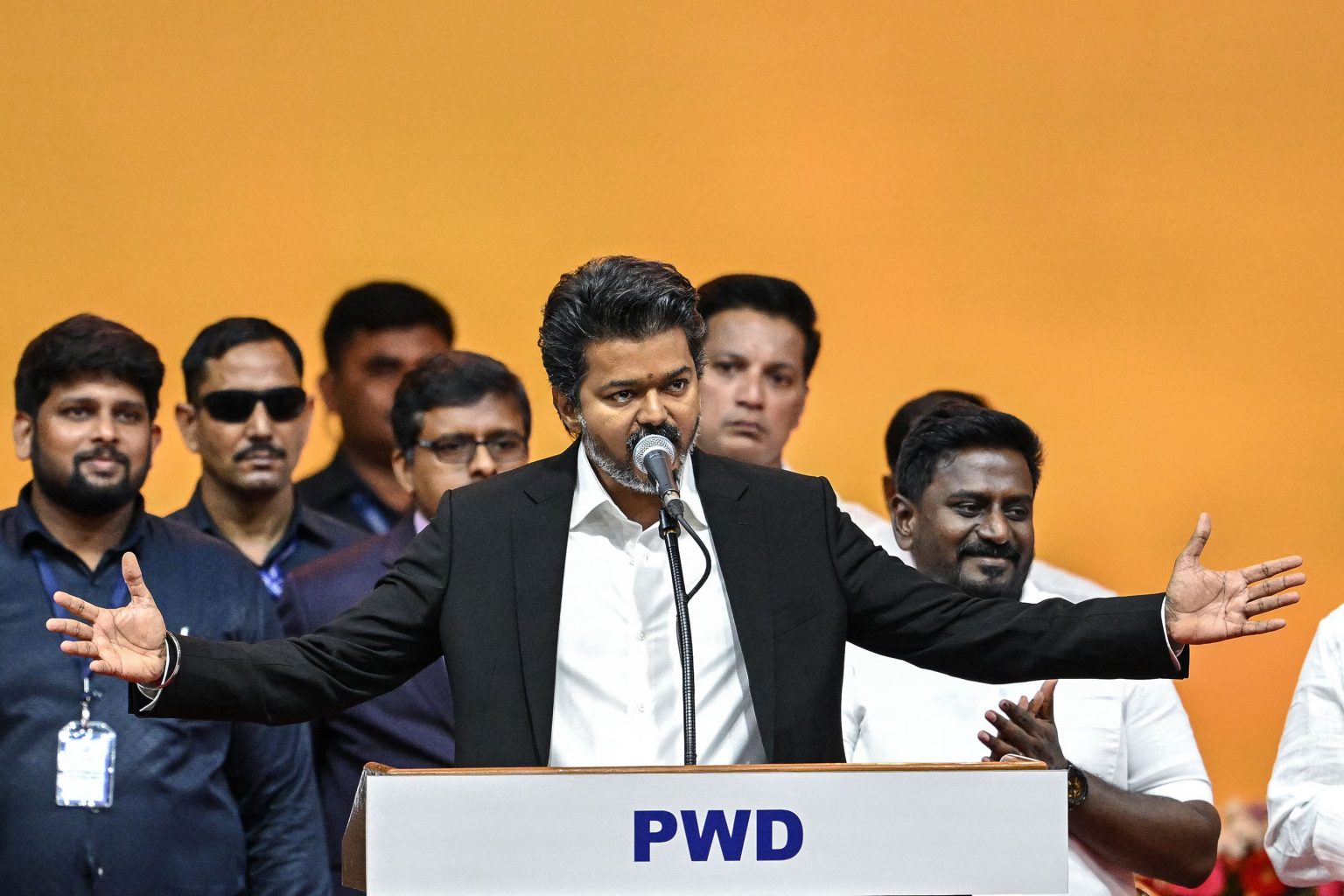
KATHMANDU: Chandrasekaran Joseph Vijay, one of South India’s most influential film stars, has officially entered a new political era after being sworn in as the Chief Minister of Tamil Nadu, marking a dramatic shift in the state’s modern political history.
Historic Oath Ceremony in Chennai
In a grand and highly attended ceremony held at the Jawaharlal Nehru Stadium in Chennai, Vijay took oath as Chief Minister on Sunday morning.
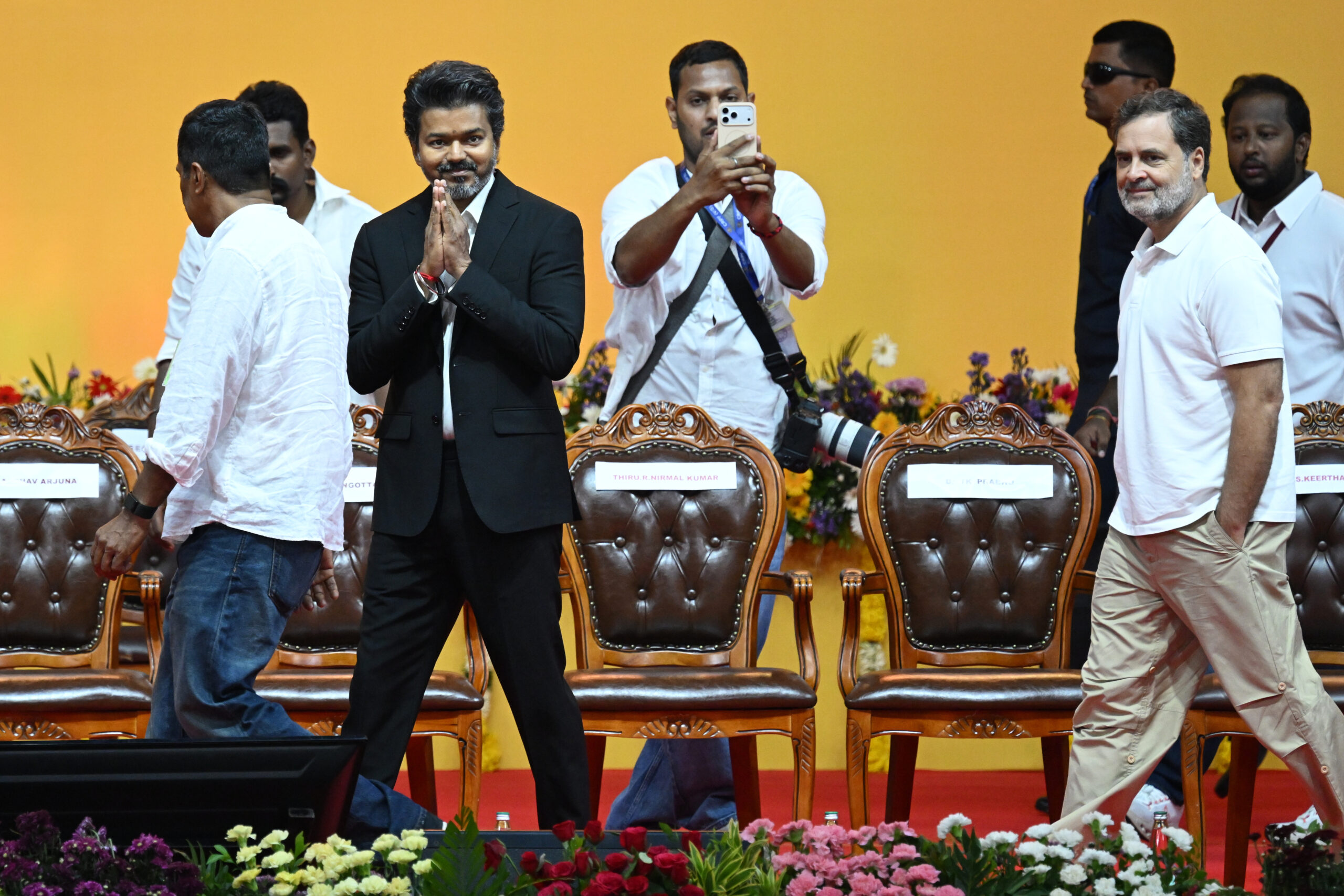
The event drew thousands of supporters, along with film personalities, senior political leaders, and members of his family.
Tamil Nadu Governor Rajendra Vishwanath Arlekar administered the oath.
The ceremony symbolized not just a leadership change, but a major political realignment in the state, long dominated for nearly six decades by the two Dravidian giants, Dravida Munnetra Kazhagam (DMK) and All India Anna Dravida Munnetra Kazhagam (AIADMK).
From Cinema Icon to Political Leader
Before entering politics, Vijay enjoyed a blockbuster career spanning over three decades in Tamil cinema. Popularly known as “Thalapathy” (Commander), he built a massive fan base across Tamil Nadu and beyond.
His notable films include Ghilli, Thuppakki, Kaththi, Mersal, Master, and Leo, which cemented his status as a box-office powerhouse.
Many of his roles portrayed themes of justice, anti-corruption, and leadership, contributing to his strong social appeal—especially among youth and working-class audiences.
Rise of Tamilaga Vettri Kazhagam (TVK)
In 2024, Vijay formally launched his political party, Tamilaga Vettri Kazhagam (TVK), marking his full-time entry into politics. The party quickly gained momentum, driven by his popularity and disciplined public image.
In the recently concluded 234-seat Tamil Nadu Assembly elections, TVK contested all constituencies and won 108 seats, emerging as a major political force.
However, it fell short of the 118-seat majority required to form government independently.
Coalition Government Formation
After the results, Vijay successfully secured support from multiple key allies, including the Indian National Congress, Communist Party of India (CPI), Communist Party of India (Marxist) (CPI-M), as well as the Viduthalai Chiruthaigal Katchi (VCK) and Indian Union Muslim League (IUML).
With this backing, TVK’s support rose to 120 legislators, clearing the path for government formation.
Political analysts describe the alliance as a major anti-establishment realignment, effectively ending the long-standing two-party dominance in Tamil Nadu politics.
First Decisions as Chief Minister
Immediately after taking oath, Vijay signed three key policy directions on stage:
- Free electricity up to 200 units for every household
- Formation of special anti-drug enforcement units in all districts
- Creation of dedicated task forces for women’s safety
These early announcements reflect his administration’s focus on welfare, security, and social reform.
Cabinet Formation and Representation
Alongside Vijay, nine ministers were sworn in:
Bucci N Anand, Adhav Arjuna, K.G. Arunraj, K.A. Sengottaiyan, P. Venkataramanan, C.T.R. Nirmalkumar, A. Rajmohan, T.K. Prabhu, and S. Keerthana.
The cabinet reflects regional balance, with representation from Chennai, western, and southern districts. It also includes representation from women and Scheduled Caste (SC) communities, marking an inclusive approach to governance.
Vijay himself was elected from both Perambur and Tiruchirappalli East constituencies and will vacate one seat as required by electoral rules.
Assembly and Constitutional Timeline
Following the formation of government, the Governor directed Vijay to prove his majority on the floor of the assembly by May 13 or earlier.
A New Political Era
Vijay’s journey from cinema superstardom to the Chief Minister’s office represents one of the most significant celebrity-to-politics transitions in recent Indian history.
In his first address as Chief Minister, he emphasized development, transparency, youth empowerment, education reform, employment generation, and infrastructure modernization as key priorities.
While his rise has reshaped Tamil Nadu’s political landscape, analysts note that the real test now lies in managing coalition dynamics and delivering governance beyond his immense popular appeal.
With strong cinematic charisma and a rapidly growing political base, Vijay’s leadership marks the beginning of a new and closely watched chapter in Tamil Nadu politics.