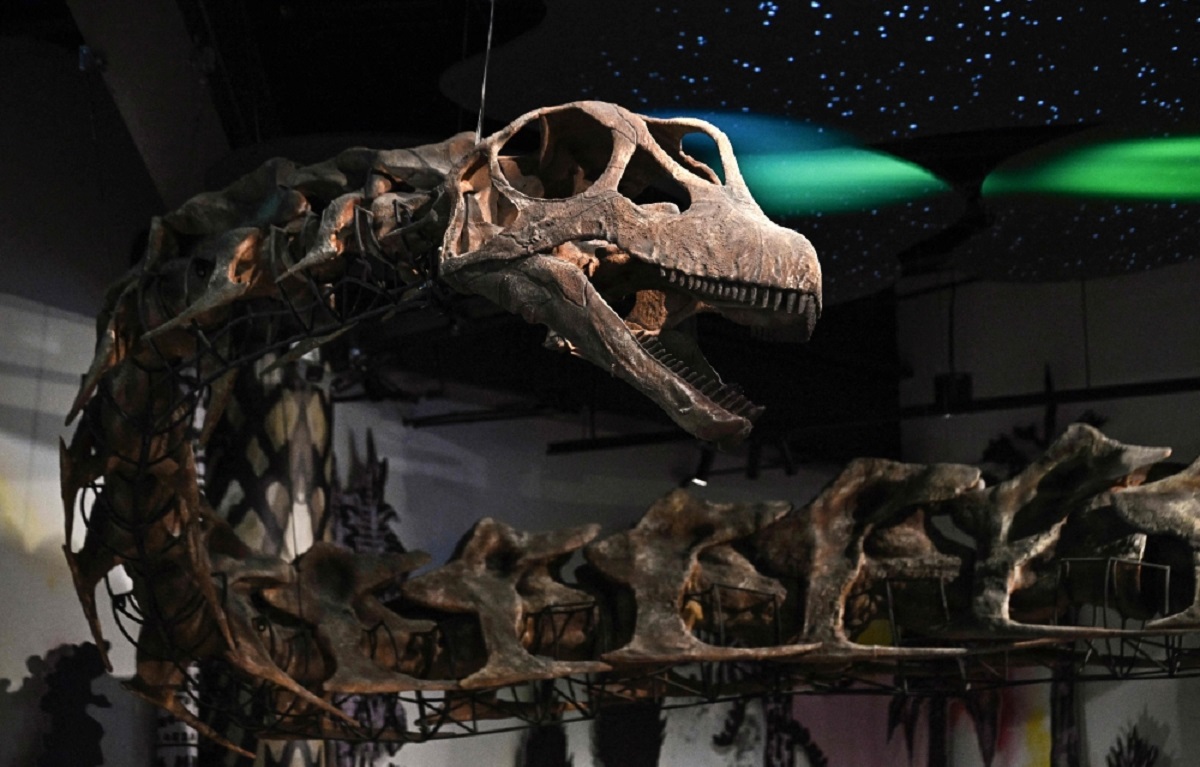
The gigantic plant-eating dinosaur, estimated to be around 27 meters long and weigh nearly 27 tons, is believed to have roamed present-day Thailand between 100 and 120 million years ago.
According to a study published Thursday in the journal Scientific Reports, the long-necked sauropod weighed roughly the same as nine adult Asian elephants, making it the biggest dinosaur ever found in the region.
Lead researcher Thitivat Sethapanichsakul compared the newly discovered species to the famous “Dippy the Diplodocus” displayed at London’s Natural History Museum, saying the Thai dinosaur may have been at least 10 tons heavier.
Researchers from University College London said a Thai PhD student nicknamed the dinosaur the “last titan” because its fossils were found in Thailand’s youngest dinosaur-bearing rock layers.
Scientists believe the area later transformed into a shallow sea, suggesting the creature may have been among the final giant sauropods in Southeast Asia.
The first remains of the dinosaur were discovered by local residents in northeastern Thailand nearly a decade ago, but the excavation process was highly complex and was only completed in 2024.
After comparing the fossils with previously known sauropod species, researchers concluded that its unique bone structure and biological features were distinct enough to classify it as an entirely new species.
The dinosaur has been named Nagatitan chayaphumensis, combining “Naga” — the serpent-like creature from Southeast Asian mythology — “Titan” from Greek mythology, and Chaiyaphum Province in Thailand, where the fossils were found.
A life-sized reconstruction of the giant dinosaur is now on display at the Thainosaur Museum in Bangkok for public viewing.