Israel–Iran conflict spreads across Middle East
The attacks, supported by the United States, mark a dramatic escalation, signaling a potential regional war.

KATHMANDU: Tensions in the Middle East have sharply intensified as Israel launched widespread airstrikes across Lebanon targeting Iran-backed Hezbollah positions, following claims of rocket and drone attacks by the group in retaliation for the assassination of Iran’s Supreme Leader, Ayatollah Ali Khamenei.
The attacks, supported by the United States, mark a dramatic escalation, signaling a potential regional war. Hezbollah, Tehran’s Shiite proxy, said it struck Israeli targets in revenge for Khamenei’s death, prompting Israeli forces to carry out heavy bombardments in southern Lebanon, including Beirut. Civilians in Sidon reportedly fled their homes as explosions rocked the Lebanese capital in the early hours.
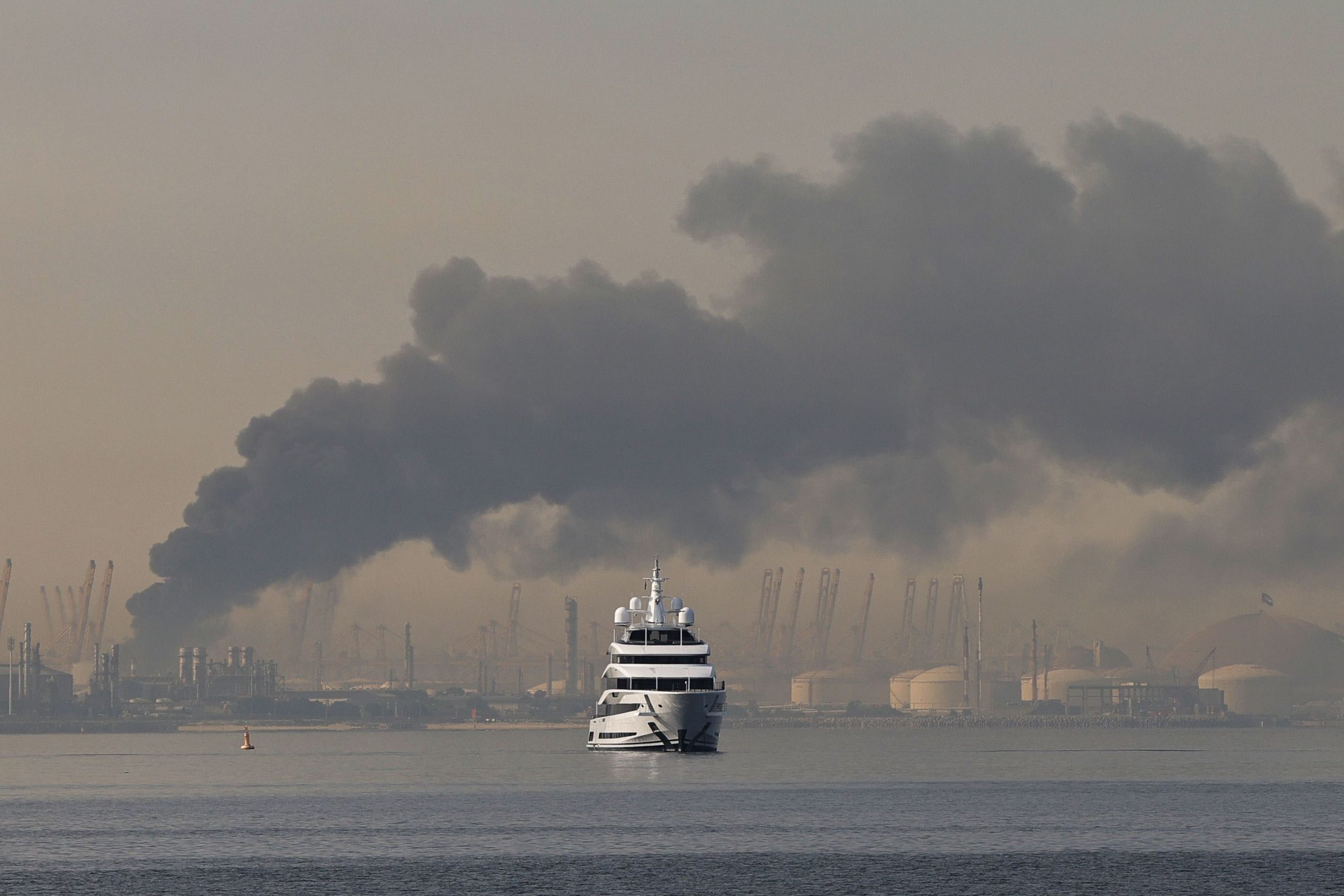
Meanwhile, the U.S. military expanded operations inside Iran, striking strategic targets including the headquarters of the Islamic Revolutionary Guard Corps (IRGC). In response, Iran launched missile and drone attacks on Israel, as well as Gulf states including the United Arab Emirates, Qatar, and Bahrain. Strikes near oil facilities and in the Bet Semesh area killed at least nine and injured dozens, including casualties in Jerusalem. Explosions were also reported in Doha, Dubai, and Manama, with at least four fatalities in Gulf retaliatory attacks.
Iranian authorities confirmed 201 deaths and hundreds injured in recent strikes. Among the fatalities were Khamenei’s key advisor Ali Shamkhani and IRGC commander General Mohammad Pakpour.
U.S. President Donald Trump vowed harsher retaliation following the deaths of three American soldiers during “Operation Epic Fury,” warning Iranian forces that continued resistance would mean “certain death.” However, Iran’s top security official Ali Larijani rejected any negotiations with the U.S., while President Masoud Pezeshkian described Khamenei’s assassination as a declaration of war against Muslims, affirming the right to retaliate. Ayatollah Alireza Arafi has assumed interim leadership responsibilities following Khamenei’s death.
Lebanon’s Prime Minister Nawaf Salam condemned Hezbollah’s rocket attacks as “irresponsible,” warning of increased national risk. Separately, an attempted attack on the U.S. consulate in Karachi, Pakistan, resulted in 17 fatalities.
Amid the chaos, Israel and the U.S. have urged Iranian citizens to rise against the regime, with Shah Reza Pahlavi also calling for patience until the “right moment.” Public reaction in Iran has been mixed, with celebrations in some areas and anti-American protests in others.
The conflict is already affecting global commerce. Naval clashes in the Strait of Hormuz, following Iranian threats to close the vital oil route, have led to attacks on vessels and a spike in global oil prices. The U.S. claims to have sunk nine Iranian naval vessels, while Iran alleges it targeted the USS Abraham Lincoln aircraft carrier, a claim denied by the Pentagon.
The Israel–Iran confrontation, once a limited clash, is now spiraling into a broader regional conflict, posing serious risks to Middle East security and the global economy.