Team stayed united despite dispute; captaincy is internal matter – Samba
Despite the loss, newly-appointed captain Sabitra said the team has grown stronger and more united through the experience.

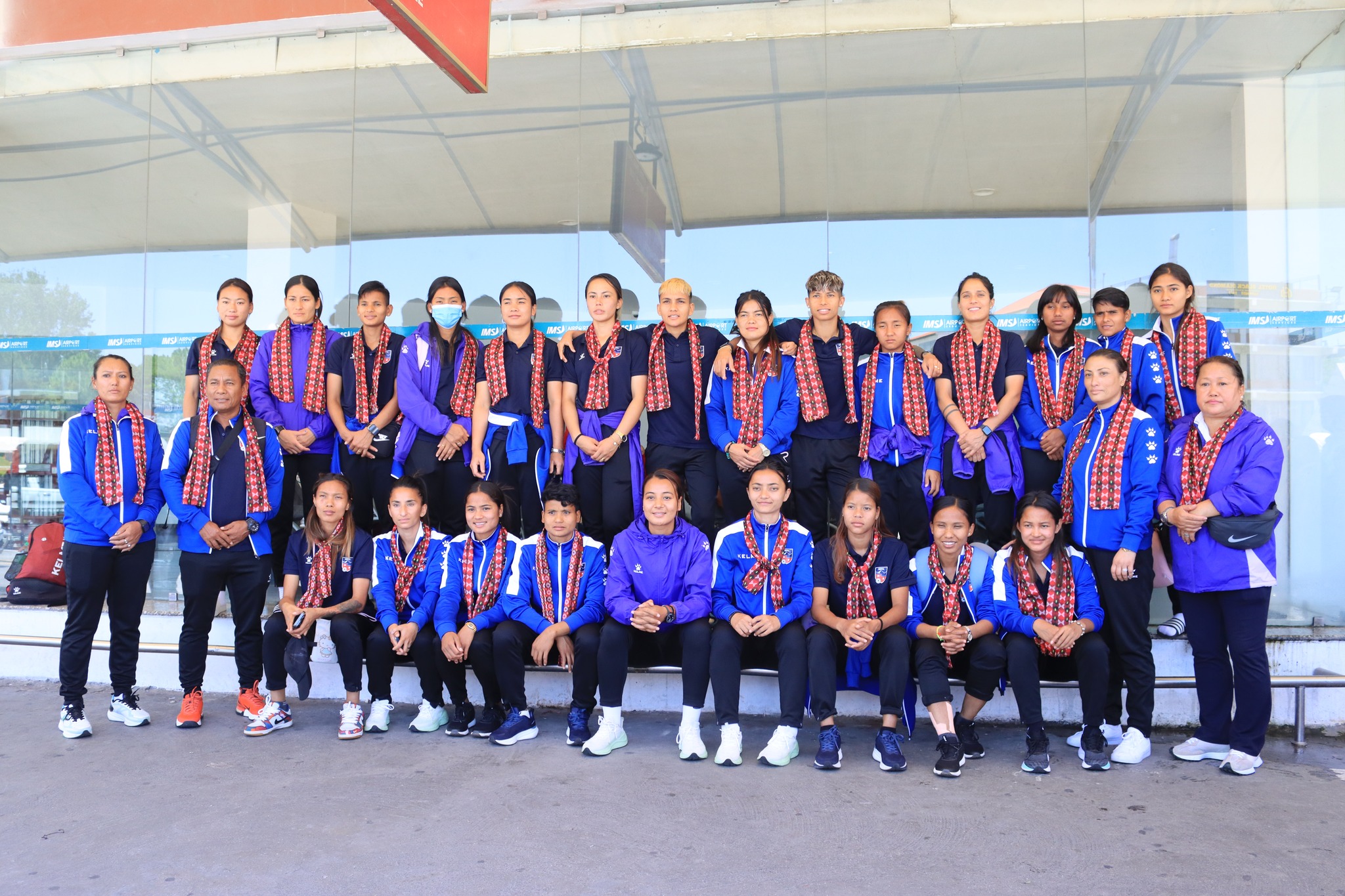
KATHMANDU: Nepali national women’s football team captain Sabitra Bhandari, popularly known as Samba, has returned home with “positive energy” despite Nepal’s heartbreaking exit from the AFC Women’s Asian Cup Qualifiers in Uzbekistan.
Nepal came agonizingly close to qualifying for the prestigious tournament for the first time since 1999, but lost 4-2 in a penalty shootout against hosts Uzbekistan in the decisive Group F match.
Despite the loss, newly-appointed captain Sabitra said the team has grown stronger and more united through the experience.
Fighting Spirit Until the End
Nepal trailed 3-1 in the first half, but a red card to an Uzbek player before the break gave Nepal an advantage. The team staged a strong comeback, leveling the score 3-3 in regulation time. However, the penalty shootout saw Sabitra and goalkeeper Anjana Rana Magar miss their attempts, dashing Nepal’s dream of Asian Cup qualification.
Captaincy Controversy and Mental Pressure
Sabitra was appointed captain shortly before the qualifiers, replacing the previously announced Renuka Nagarkoti in a sudden decision by ANFA. The change, which also included replacing regular goalkeeper Anjila Tumbapo Subba with Anjana, sparked internal controversy. Sabitra admitted the situation was stressful and affected her sleep but credited her teammates for their support.
“This was an internal matter, but the dispute became public, which shouldn’t have happened. Still, our team stayed united,” she said. “Everyone in the squad played like a leader.”
Learning from Defeat
Despite the defeat, Sabitra praised the team’s resilience and performance against a stronger side. “We played attacking football even with three defenders, followed the coach’s strategy, and showed fighting spirit,” she said. “Losing early goals made it hard to recover, but coaching staff motivated us to fight back.”
Coach Patrick De Wilde encouraged the players at halftime, saying the game was not over. Sabitra said the experience taught the team valuable lessons, even though they couldn’t fully capitalize on the opportunity.
“This was a 50-50 game. We had the chance but couldn’t seize it, which will haunt us,” she reflected. “Still, we received applause from the fans there. That gave us energy.”
Sabitra’s Outstanding Performance
Sabitra had an outstanding tournament individually, scoring 9 of Nepal’s 20 goals in the qualifiers. Her leadership and scoring ability highlighted her role as a central figure in the team. However, the missed penalty will remain a bitter memory.
With this result, Nepal missed the chance to become the third South Asian nation to qualify for the Asian Cup, after India and Bangladesh secured their places.
Looking Ahead
Despite the setback, Sabitra remains hopeful. “This was a big opportunity that we couldn’t utilize fully. But we gained experience and energy that we’ll take forward,” she said. “In the future, I hope no such captaincy issues arise. And no matter who wears the armband, every player should play like a captain.”
As Nepal’s women’s football looks to the future, Sabitra’s message is clear: unity, resilience, and growth will be key to chasing the dream once more.